





 |
Learning Objectives
Lines and Shapes are two important elements of art, and imperative in understanding the creation of objects both from imagination and observation. The introduction of ink
Materials
Precut sheets of 8” x 9” paper for sketchbooks (drawing, watercolor, gray, black, tag board, manila, gold, and silver), 12” x 12” sheets of light gray paper for final projects, ink, bamboo pens, brushes, fat black crayola markers, black crayons, red, yellow, blue, and white pencils, glue sticks, red, yellow, and blue construction paper, scissors, rulers, circular objects for tracing, gray construction paper for testing, extra paper, project sample, Kandinsky paintings for visual aids, tables of lines and shapes
Vocabulary
Straight, angular, curved, diagonal, vertical, horizontal, thick, thin, solid, dashed, abstract, Expressionism
Artists
Wassily Kandinsky
 |
 |
 |
Lesson
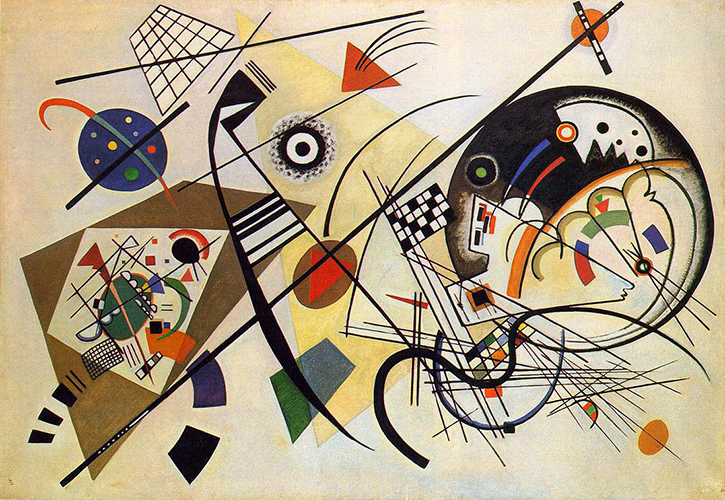
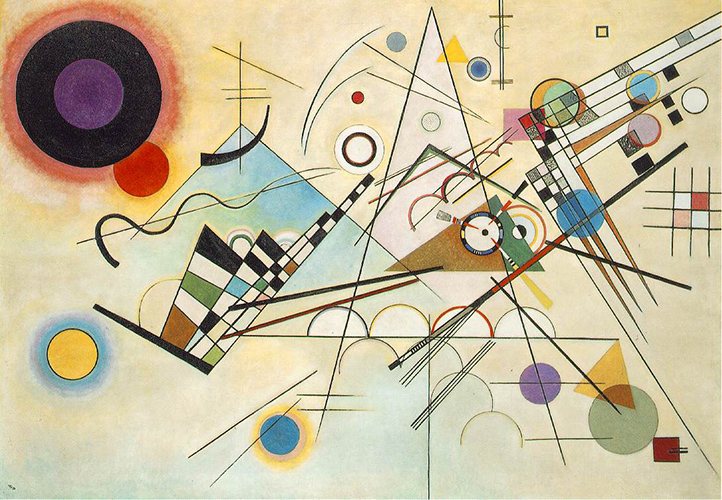
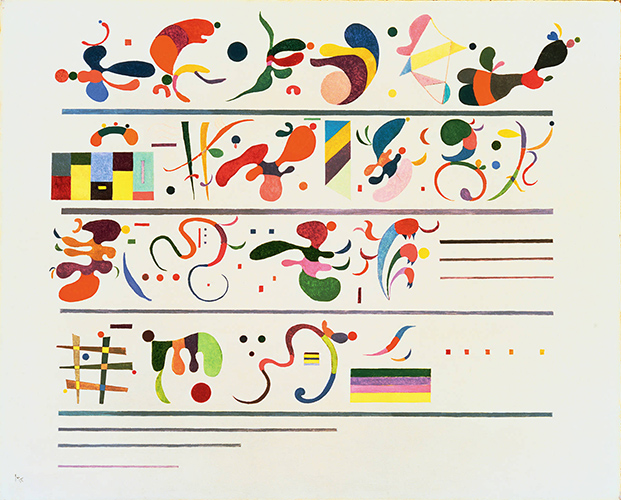
This lesson introduces students to the major elements of design: line and shape. Lines are important for defining space, boundaries, and negative space – all integral parts of artistic knowledge. Lines make shapes, and all objects in life are comprised of shapes. Art History will also be used with the introduction of Wassily Kandinsky, Expressionism, and the concept of abstract art.
Teaching students about different lines and shapes will come in handy throughout their artistic shapes, especially when drawing from observation – being able to see shapes within a structure to recreate it, and also with a future introduction of the concept of negative and positive spaces. Shapes are everywhere, and line has a variety that when used creates different effects.
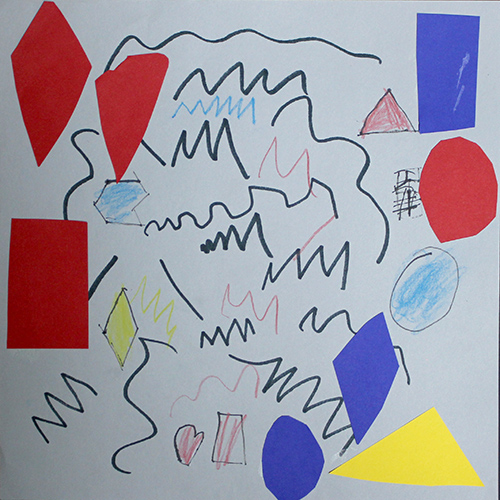
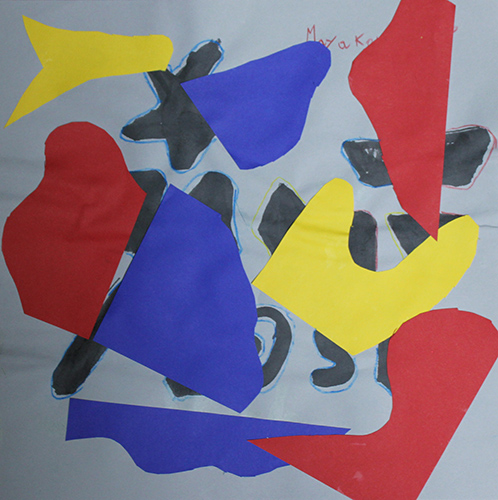
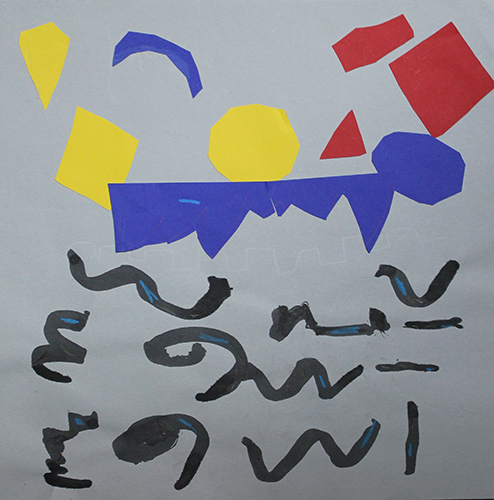
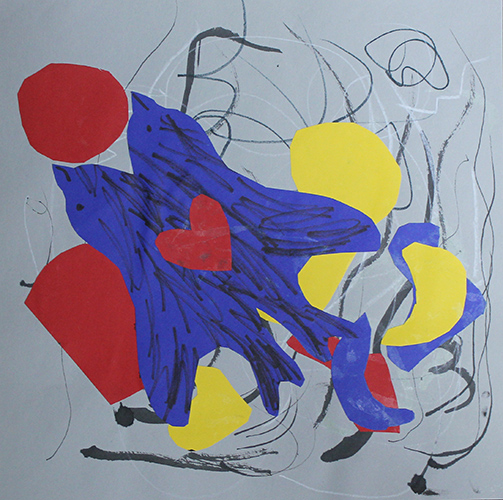
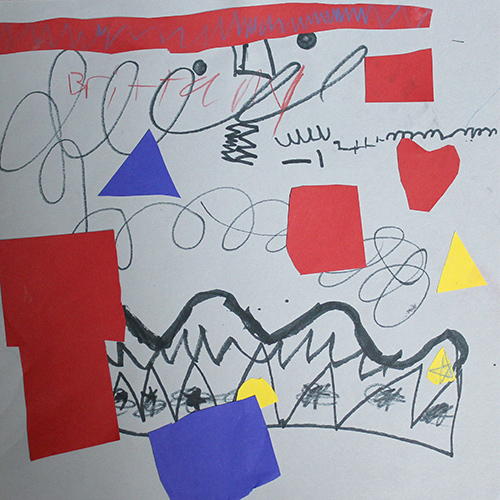
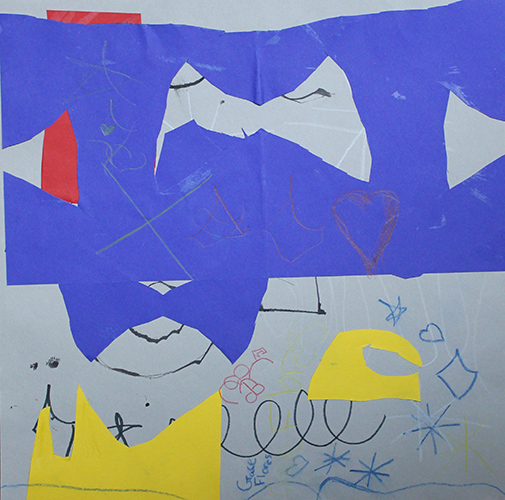
After an exploration and discussion of Kandinsky's paintings, and what kinds of lines and shapes we can think of, students practice creating different kinds of lines using different materials in their sketchbooks. Once they have finished exploring all the materials they are free to begin their projects. Using whatever medium they like - pen, ink, pencil, crayon, etc. - students are to create a variety of lines. Primary colored construction paper is also available for cutting out shapes to add to the composition.
 |
 |
 |
 |
 |
 |
